

What Homeowners Need to Know
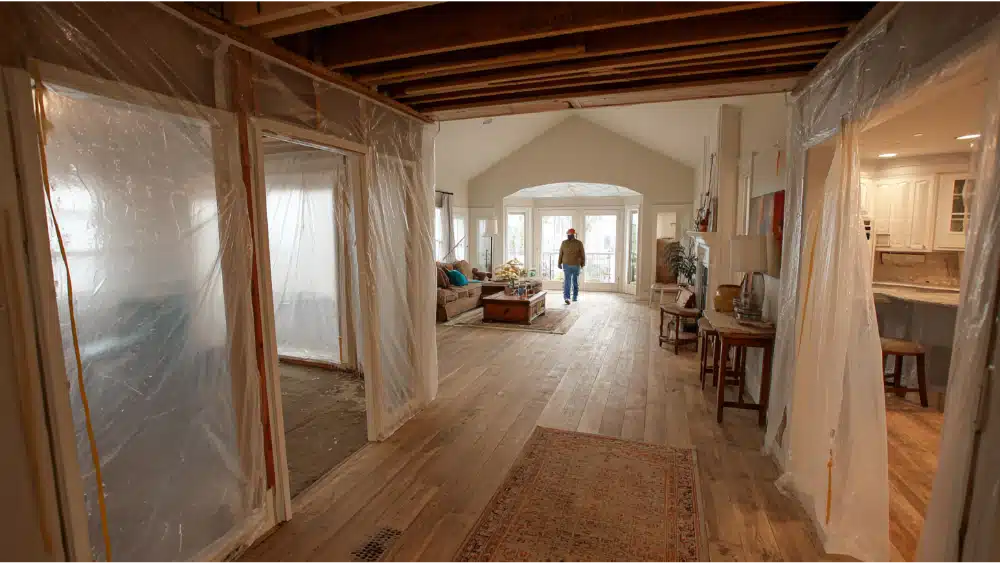
A full home remodel is an exciting step, but it also brings real disruption to your daily life. Many homeowners ask the same question at the start: can you live in your house during a full remodel? The answer depends on the scope of the renovation, how the construction process is planned, and how much disruption your family can realistically handle. In some cases, staying in your house makes sense. In others, it quickly becomes impractical or even unsafe. The key is having a solid plan from the beginning so you can protect your living space while keeping your project moving forward.
The Short Answer: Can You Stay or Should You Move Out to Temporary Housing?
For smaller projects or a phased renovation, living in your house can work. If construction is limited to one room or separated work areas, your daily life may continue with some adjustments. However, in a whole house remodel, where multiple systems and rooms are under construction, staying often becomes difficult. Many homeowners choose temporary housing during this stage to reduce stress and allow construction crews to work efficiently.
A good contractor will walk you through this decision early. With clear communication and a well thought out plan, you can determine whether staying in your home renovation is realistic or if temporary lodging is the better option. Making the right call here can make the entire process easier and more predictable.
What Defines a Full Remodel?
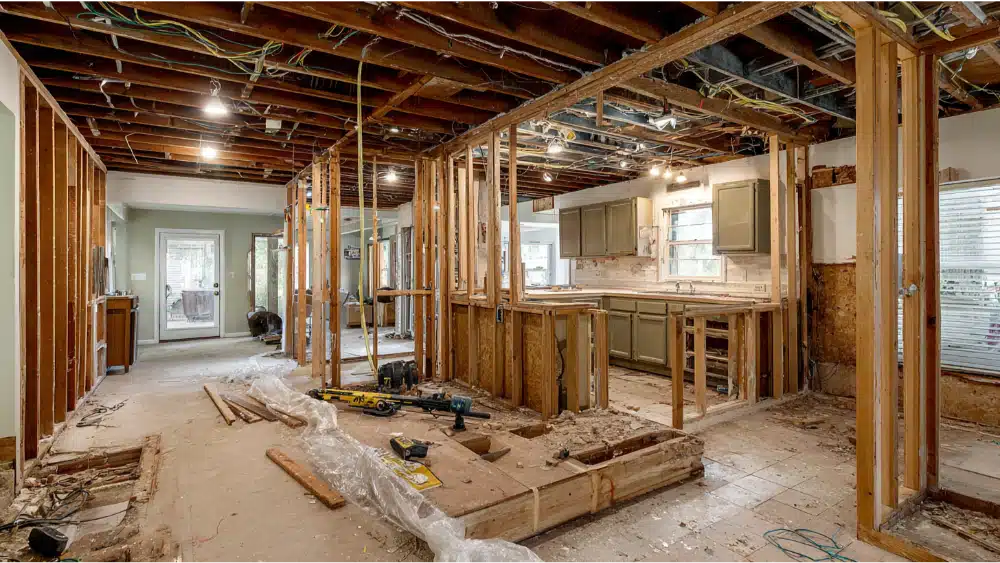
A full remodel goes far beyond surface updates. It often includes structural changes, new layouts, updated electrical systems, plumbing upgrades, HVAC work, and full kitchen and bathroom renovations. When multiple construction areas are active at once, your home begins to feel more like a job site than a comfortable living area.
Why Scope Matters for Livability
The scope of your remodeling project has a direct impact on whether you can stay in your house. A single room renovation may allow you to maintain access to essential items and keep your living space functional. But when your kitchen, bathroom, and main living area are all affected, it becomes much harder to maintain any sense of normal life.
At a certain point, the disruption shifts from inconvenient to nearly impossible. When exposed wires, sharp tools, and constant construction noise are part of your environment, safety risks increase for every family member, including kids and pets.
5 Key Factors That Determine If You Can Live at Home During a Remodel
1 | Health and Safety Conditions: Managing Safety Risks
Construction brings dust, debris, and airborne particles into your home. In older homes, disturbing materials may expose lead paint or other hazards. These conditions can lead to respiratory issues, especially for kids, pets, or any family member with sensitivities.
Controlling dust becomes critical. Professional contractors use plastic barriers and containment strategies to isolate work zones, but even with these systems, fine particles can travel. Construction sites are not designed for everyday living, and safety risks increase when living space overlaps with active work areas.
2 | Access to Essential Spaces
Access to a functional kitchen and bathroom is one of the biggest deciding factors. Without running water or a usable bathroom, staying in the house becomes extremely difficult. Many homeowners try to maintain one bathroom during the renovation, but this is not always possible.
A temporary kitchen can help bridge the gap. Setting up a mini kitchen with a mini fridge, coffee maker, and even a camping stove can make a big difference for a little while. Still, these setups are not long term solutions, especially during a full remodel.
3 | Utility Interruptions
During construction, utilities are often shut off in phases. You may experience interruptions to electricity, running water, or HVAC systems. These disruptions affect your entire living area and can make basic routines hard to maintain.
Even short interruptions add up over time. Without consistent access to utilities, the comfort of your home quickly declines, and daily life becomes more challenging.
4 | Project Phasing and Layout Separation
A well planned home remodel can create clear separation between construction areas and occupied spaces. Temporary walls, sealed doorways, and designated work zones help control dust and noise. However, in a whole house renovation, this separation is not always possible.
As the project progresses, different work areas may shift, and previously accessible rooms can become off limits. This constant change makes it harder to maintain a stable living space.
5 | Timeline and Project Complexity
The longer the remodel, the harder it is to stay in your house. A short renovation may be manageable, but a multi month construction process can wear on your family over time. Noise, dust, and limited access to key areas create ongoing disruption.
Complex projects with overlapping phases increase the challenge. Without enough wiggle room in the schedule, delays can extend the timeline and add even more stress to your life.
When It Makes Sense to Stay in Your Home and Save Money
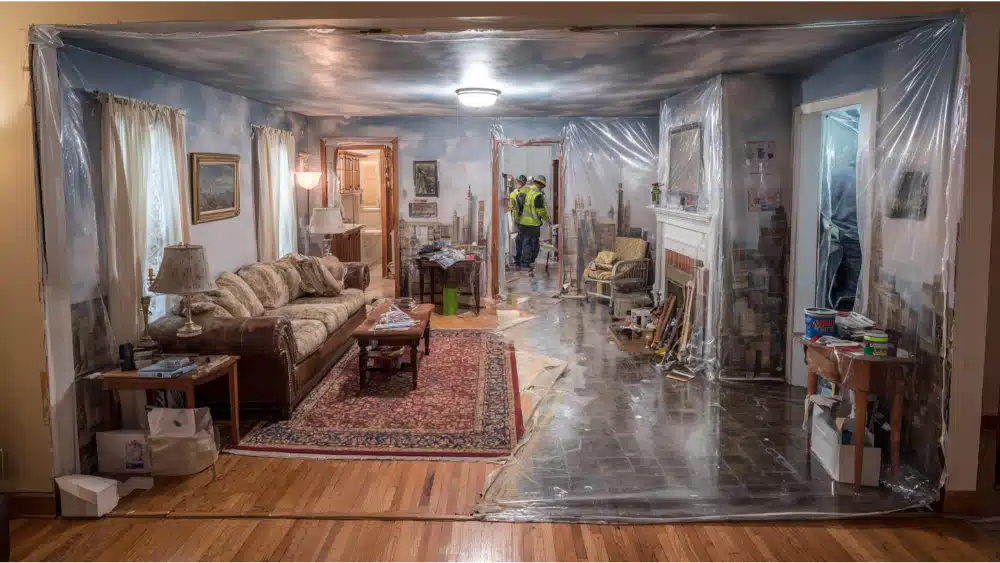
There are situations where staying in your home during a remodel makes sense. If the project is limited in scope or carefully phased, you may be able to maintain a functional living area. Homes with extra space, such as a basement, garage, or spare bedroom, offer more flexibility.
What Makes Staying Work
Preparation is everything. Creating a temporary living space that includes storage for essential items, a temporary kitchen, and a defined living area can help maintain some normalcy. Clear communication with your contractor ensures everyone understands which areas are accessible and which are off limits.
Many homeowners who stay in their house during renovation do so successfully because they plan ahead. They accept that the environment will be messy, noisy, and constantly changing.
Realistic Expectations
Even with a strong plan, living through construction is not easy. Power tools, constant noise, and visible construction progress can disrupt your sense of comfort. The house may feel less like a home and more like a workspace.
For some homeowners, this trade off is manageable. For others, it becomes overwhelming. Understanding your tolerance for disruption is key to making the right decision.
When Moving Out Is the Better Choice for Safety and Comfort
In a full home remodel, moving out is often the better option. When your kitchen, bathroom, and main living space are all under construction, daily routines become difficult to maintain. For families with kids and pets, the environment can quickly become unsafe.
Benefits of Moving Out
Temporary housing provides a clean and stable environment while your home renovation is underway. It allows construction crews to work without interruption, which can speed up progress and improve efficiency.
One of the most obvious benefits is reduced stress. Without the constant presence of dust, noise, and construction activity, your family can maintain a more comfortable routine. It also creates a safer environment, free from exposed wires, sharp tools, and active work zones.
Cost vs Value Consideration
While temporary lodging adds cost, it can also create value. Faster timelines and fewer delays can offset some of the expense. In many cases, the ability to save money on extended construction time and reduce stress makes temporary housing a worthwhile investment.
How Design Build Planning and Clear Communication Impact Your Living Situation

A successful remodel starts with a clear plan. The design build process integrates design, budgeting, and construction into one streamlined approach. This allows homeowners to make informed decisions about their living situation before construction begins.
Pre Construction Planning
During pre construction, your contractor will evaluate the scope of the project, identify potential challenges, and create a detailed plan. This includes determining whether a temporary kitchen is feasible, how work areas will be separated, and what level of disruption to expect.
A solid plan gives you the clarity needed to decide whether staying in your house is realistic or if temporary housing is the better path.
Transparent Communication
Clear communication is essential throughout the process. Staying informed about construction schedules, utility interruptions, and work zones helps you prepare for each phase of the project. A good contractor will provide regular updates and adjust the plan as needed to keep everything on track.
Strategies for Living at Home During a Remodel If You Choose To
Create a Temporary Living Plan
Start by identifying your essential items and where they will be stored. Set up a temporary kitchen with a mini fridge, coffee maker, and basic cooking tools. If possible, designate one bathroom for use throughout the renovation.
Creating a mini kitchen or even a small setup in the garage can help maintain some routine. The goal is to create a functional living space within the limits of your construction environment.
Protect Indoor Air Quality
Dust is one of the biggest challenges during a remodel. Using plastic barriers, air filtration, and proper ventilation helps control dust and improve air quality. This is especially important for families with kids, pets, or anyone with respiratory issues.
Maintain Daily Routine
Keeping a consistent routine can help reduce stress during construction. Plan your day around work hours, and create quiet spaces away from active construction areas when possible.
Set Boundaries with Your Contractor
Establish clear guidelines for work hours, access points, and safety protocols. This ensures that both your family and the construction crews can operate safely within the same environment.
Common Mistakes Homeowners Make
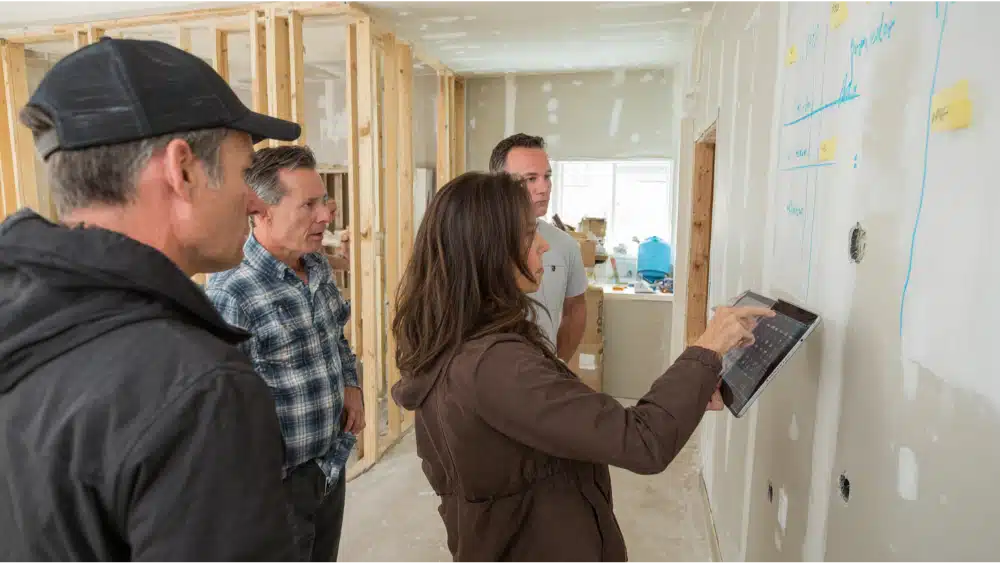
Many homeowners underestimate how disruptive a full remodel can be. What seems manageable at first can quickly become overwhelming as the project progresses. Trying to stay in the house to save money can lead to longer timelines and increased stress.
Another common mistake is failing to plan for storage. Construction requires space for materials, tools, and equipment. Without proper storage, your home can quickly become cluttered and difficult to navigate.
A lack of clear communication with your contractor can also create confusion about access, timelines, and expectations. Staying informed and involved makes a big difference in the overall experience.
How Origami Design Build Helps You Make the Right Call
At Origami Design Build, we understand that every home renovation is unique. We take the time to evaluate your project, your space, and your family’s needs before making recommendations.
Our team works closely with homeowners to create a plan that balances comfort, safety, and efficiency. Whether that means designing a phased remodel that allows you to stay in your home or recommending temporary housing for a smoother process, our goal is to guide you with clarity and confidence.
A Better Remodeling Experience
We focus on more than just the final result. Our approach prioritizes communication, craftsmanship, and a well organized process from start to finish. With the right plan in place, your remodel can feel less overwhelming and more manageable.
Frequently Asked Questions
Is it cheaper to live in your house during a remodel?
In some cases, staying in your house can save money on temporary housing. However, it may slow down construction and extend the overall timeline, which can increase costs.
How do people shower during a remodel?
Many homeowners keep one bathroom functional during the renovation. If that is not possible, temporary lodging or alternative arrangements may be necessary.
Can you live in a house without a kitchen?
It is possible for a short time using a temporary kitchen setup with a mini fridge, coffee maker, and small appliances. Over longer periods, it becomes less practical.
How long do full home remodels take?
Most full home remodel projects take several months, depending on the scope and complexity. Larger renovations can take longer.
Is it safe for kids or pets?
Construction environments present safety risks, including dust, noise, and exposed materials. For families with kids and pets, temporary housing is often the safest option.
Final Thoughts: Plan Your Remodel Around Your Life, Not Just Your House
A successful remodel is about more than the finished space. It is about how you move through the process. Deciding whether to stay in your house during construction is one of the most important choices you will make.
With a clear plan, the right contractor, and realistic expectations, you can create a renovation experience that supports your life, not disrupts it. If you are planning a home remodel, start the conversation early and build a strategy that works for your family, your space, and your goals.